Glissando II entstand aus einer Kollaboration von Benjamin Sprick (Cello) und David Wallraf (Elektronik/Montage) für die Abschlussausstellung yet incomputable des Graduiertenkollegs der HFBK Ästhetiken des Virtuellen. Diese Audioarbeit steht in engem Bezug zu Benjamin Spricks Dissertation Resonanzen des Virtuellen, die Ausstellung kann am 04.11. und 17.12.2017 in der Sammlung Falckenberg in Hamburg Harburg besucht werden.
Die Dissertation Resonanzen des Virtuellen. Das Bewegungs-Profil und das Zeit-Profil der Musik bearbeitet eine Problemstellung im Spannungsfeld von Musiktheorie, Philosophie und Komposition. Sie geht von der Frage aus, inwiefern sich der von Gilles Deleuze in seinen beiden Kino-Büchern beschriebene Übergang von einem Bewegungs-Bild zu einem Zeit-Bild im Film auch in der Musik aufzeigen lässt. Das Ziel der Arbeit besteht darin, eine musikalische Ästhetik des Virtuellen zu entwickeln: Sie fragt danach, wie das Virtuelle musikalisch wahrgenommen und empfunden werden kann.
Ein Übergang von Bewegung und Zeit bzw. deren unausgesetzte ›Amalgamierung‹ lässt sich in der instrumentaltechnischen Operation des Glissando ausmachen: einer gleitenden Klangbewegung, die Kontinuität und Veränderung in vielfacher Weise ineinanderfließen lässt. In seiner sowohl extensiven als auch intensiven, verschiedenen Formen der Beschleunigung und Verlangsamung unterworfenen Bewegung erweist sich das Glissando als unteilbar, um sich in dieser Unteilbarkeit zugleich permanent zu verändern.
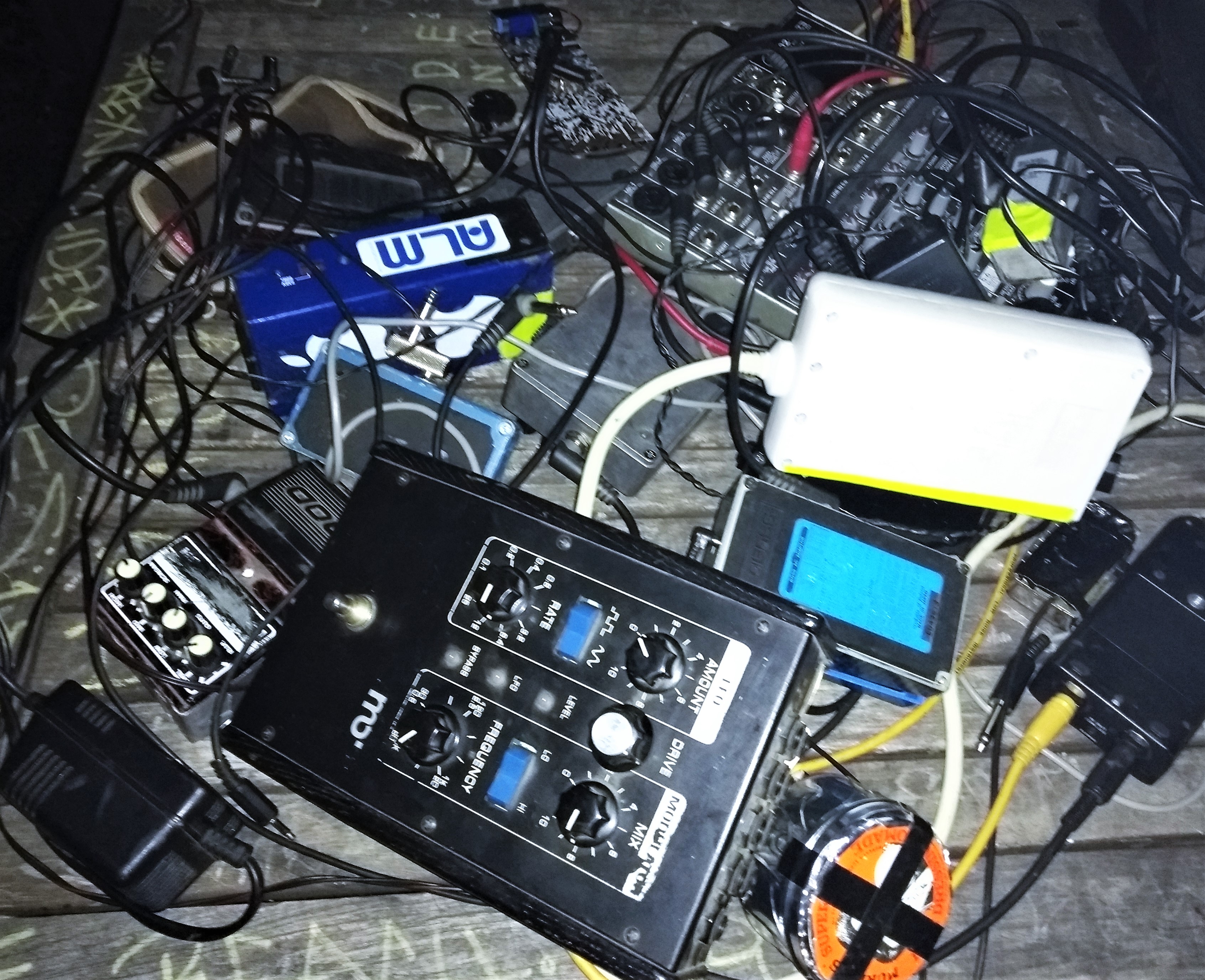
Als ›Klang-Bild‹ (image-sonore) konzipiert, setzt Glissando II Cello-Sounds verschiedenen digitalen Manipulationen aus (Ring-Modulator, Granularsynthese, Time-Stretch). Den theoretischen Ausgangspunkt bilden dabei musikalische Begriffe (›Modulation‹, ›kontinuierliche Variation‹, ›universelle Verzerrung‹), die Deleuze in seinem Text »Postskriptum über die Kontrollgesellschaften« verwendet hat.



 ⠙⠁⠧⠊⠙ ⠺⠁⠇⠇⠗⠁⠋