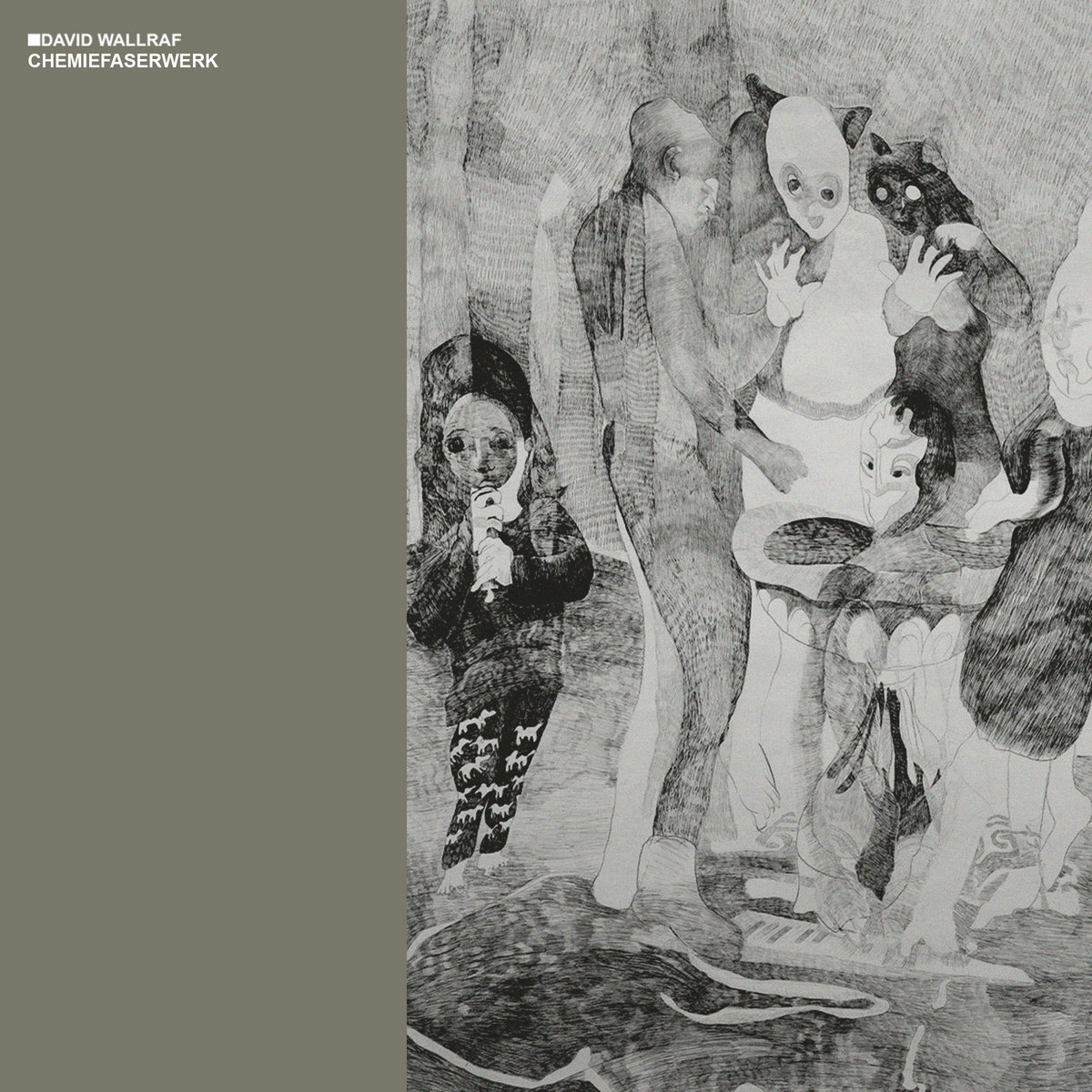
C16 split tape with Chemiefaserwerk on Frenetic Magic Sounds from Leipzig. The initial run of 9 copies sold out within an hour, but the digital download is name your pricw. A second edition will be release at some point this year.
8.221 is a collaboration with Korean noise artist Jena Jang, now out on Econore. The title refers to the distance in kilometers between Hamburg Germany and Suwon South Korea, where some of Jena’s parts where recorded. Limited edition bright pink C20 tape. Sold out on the label’s website, additional copies will be available at concerts.
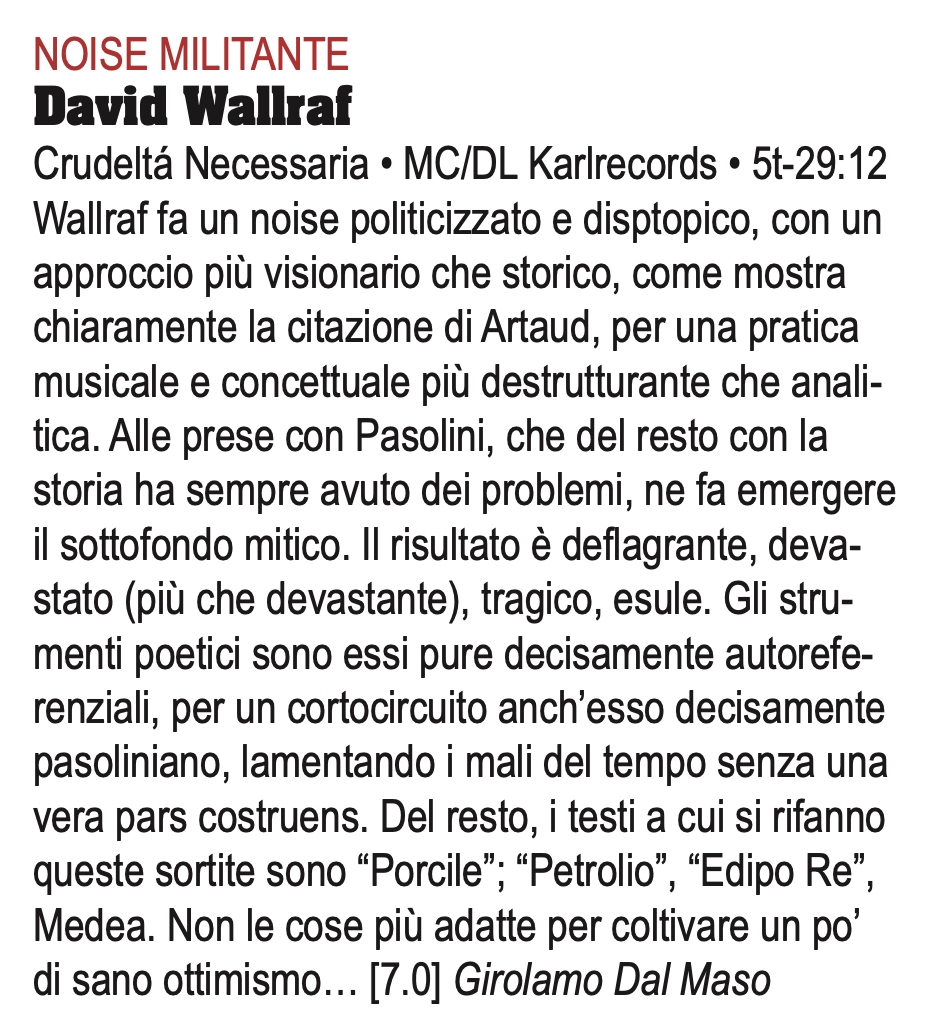
Here’s some reviews that the Crudeltá Necessaria tape on Karlrecords has garnered during the past few weeks:
Paul Casey/Musique Machine:
„Eschewing the genre tendency to lean on longer pieces and drawn out phrases, Crudeltá Necessaria moves forward quickly and with determination to bring David Wallraf’s commentary to light. Using noise, samples, field recordings, and a sense of disquiet, the message of the album is undeniably brought to the surface. Whether one is familiar with Pier Paolo Pasolini or not, this album certainly speaks to cruetly and violence, even if tangentially, through its sonic shouts. Never getting overly oppressive, Crudeltá Necessaria is a fantastic piece of smart, rough electronics.“
„Die um das Werk von Pasolini kreisende (und auch KlangSchnipsel aus dessen Filmen verarbeitende) Musik ist einmal mehr ganz und gar wundervoll, nur eben nichts für Menschen mit schwachen Nerven.“
„Stralci dei film, substrati rumoristici, il tutto prodotto con una grande attenzione alla plasticità ed alla fruibilità dell’opera, che si fa ascoltare in maniera veramente liscia, riuscendo ad essere inclusiva nella sua complessità. Il lavoro dietro a quest’opera è stato abbastanza lungo, tantopiù che nella stesura sono stati inclusi canti registrati nel 2019 e suon del 2022, a testimonianza di David Wallraf come artigiano certosino. Un artista che ha raccolto ed assemblato un magnifico viaggio dentro una crudeltà che viviamo ogni giorno e rispetto alla quale è utile cercare di farsi delle domande, o per lo meno di ascoltare attentamente.“
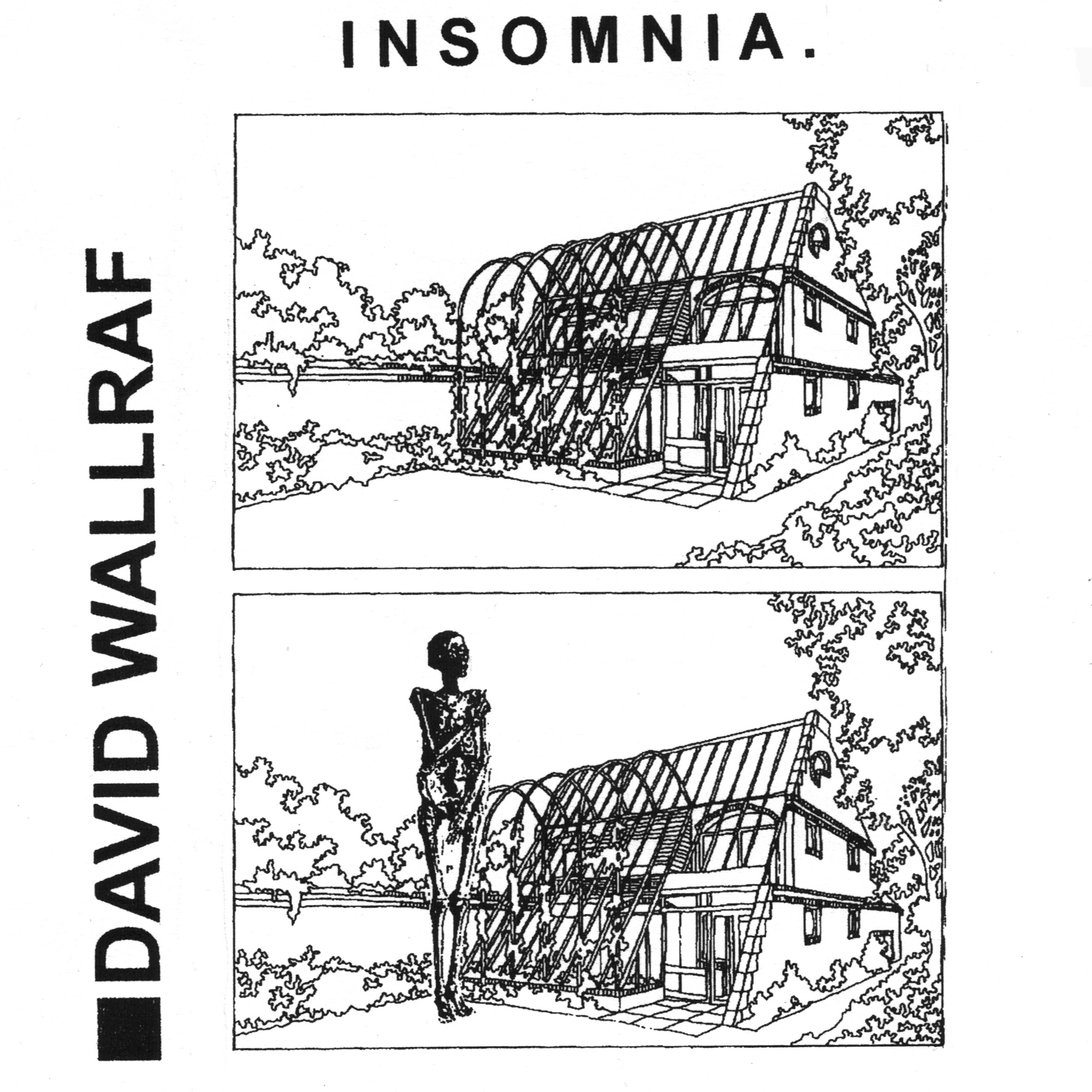
Three songs located in the nether land between noise, dub and lullaby. Initial recordings were done in a state of severe sleep deprivation. Limited edition of 30, comes with a sticker.
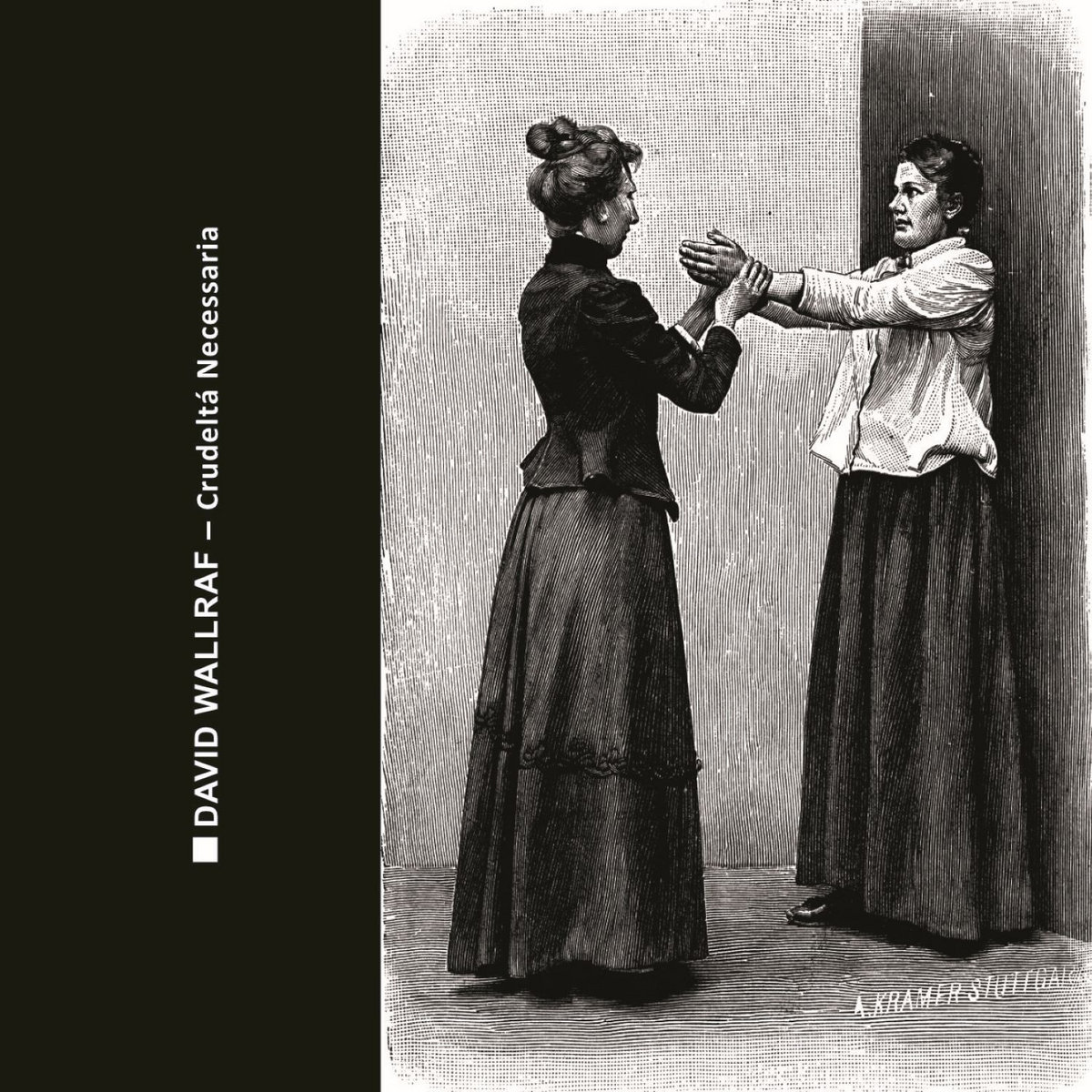
Limited edition tape, releases February 7, 2025 on Karlrecords.
Recorded in Hamburg-Wilhelmsburg, 2023-2024. Sound design fragments from Pasolini’s films Edipo Re (1967), Porcile (1969) and Medea (1969) were recorded to ¼-inch tape loops and appear throughout these selections.
The world (another word for society) is cruel in a banal sense: unjust, brutal and segregating. Life under capitalism is the generalized and global form of this cruelty, organized by the logic of abstract labor and alienation. But cruelty also carries a different meaning, one that has resonated with a few artists of the 20thcentury who positioned themselves against the cruel banality of their times. Cruelty in the sense of mercilessness or remorselessness, both a realism and a necessary stance in a battle against an overly powerful enemy. Antonin Artaud’s conception of the theater of cruelty exemplifies this stance, an „appeal to cruelty and terror […] whose range probes our entire vitality, confronts us with all our possibilities“ (The Theater and Cruelty). All our possibilities: an affirmation of radical difference. A similar posture, although it replaces Artaud’s mysticism with a communist viewpoint, can be found in the works of Pier Paolo Pasolini.
Pasolini was a merciless analyst and critic of society under capitalist production. His answer to the banal brutality of capitalism was an artistic cruelty of his own design, a necessary cruelty which is evident in the films and texts that inspired these recordings. It is evident in the transformations and transitions of the novel-fragment Petrolio, it glares and screams from the screen in his films. You can hear it in the last and only words of the young cannibal in Porcile („I killed my father. I ate human flesh. I quiver with joy.“), in Medea’s curse against Iason („It’s useless! Nothing is possible anymore!“) and in the Sphinx’s desperate cry when murdered by Oedipus („It’s useless! The abyss you’re throwing me in is in yourself!“). It gazes through the masks of mythological and historical settings. It is evident in the almost violent way Pasolini edited his films, a form of Verfremdungseffekt that exemplifies his remorseless stance towards his audience, the spectacle of the film industry, fascism and capitalistic society. This necessary cruelty serves as a last line of defense in the political and artistic struggle against societal and political pressure. With this release I hope to capture at least a fragment of this demeanor.
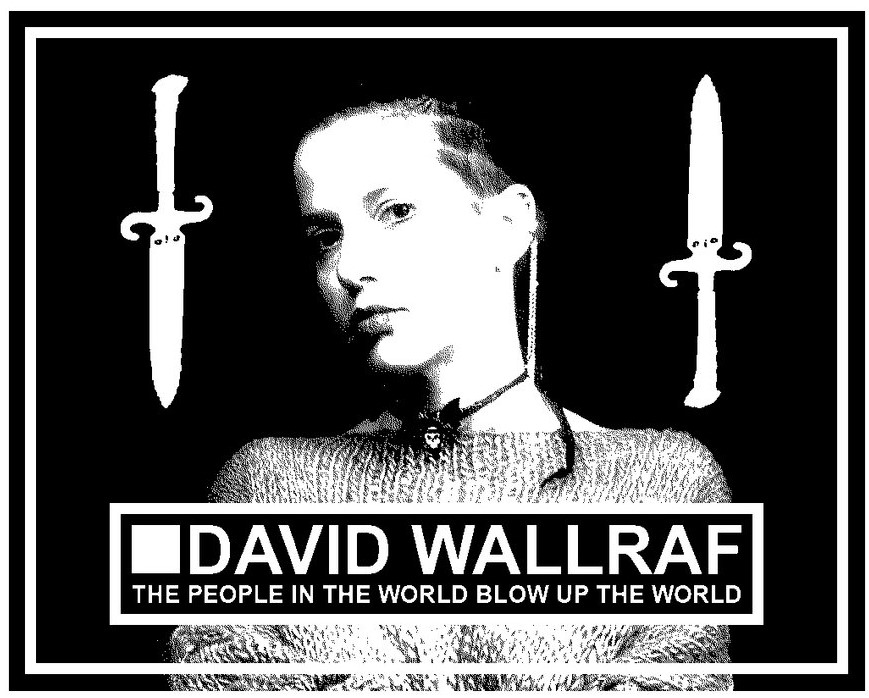
The People In The World Blow Up The World is a 6 track CDr released by Maya Schwarze Katze. The album was inspired by Kathy Acker’s 1984 novel My Death, My Life By Pier Paolo Pasolini. Tapes will also be available through the label in a bit.





 ⠙⠁⠧⠊⠙ ⠺⠁⠇⠇⠗⠁⠋